Monday, March 8, 2021

Poison


Fox News' latest conservaturd: the decision by the estate of Dr. Seuss to stop printing six of the author's books represents "cancel culture at silliest."

"A whole bunch of childhood legends are suddenly being put on cultural trial," Fox commentator Howard Kurtz says. 

"Past generations produced artists and politicians who upheld ideas that are utterly unacceptable today. But we have more important things to do than constantly trying to whitewash every book and show produced by our flawed past."

I'm happy to chide the champions of witless wokenessBut Kurtz and his network—as always—are dead wrong.

Dr. Seuss Enterprises made its decision not because it wants to "cancel" its sugar daddy (why would it?) but because, as a spokesperson said, the six discontinued books "portray people in ways that are hurtful and wrong."

But, racist zealots that they are, Kurtz and his network refuse to admit kids are influenced by books—and that some of those books are poison.

As caring parents, we keep poisons out of kids' reach for good reason. And poisonous books, too.

Consider, for example, The Poison Mushroom, a children's picture-book published by Nazi propagandist Julius Streicher. 

Used in German classrooms between 1938 and 1945, The Poison Mushroom enjoyed a vast, captive audience until the Nazi's defeat and the Allies' "denazification" initiative.

The book explains how, just as it's hard to tell a poisonous from an edible mushroom, it's hard to tell a Jew from a Gentile. 

The Poison Mushroom teaches kids to identify Jews through their purported actions: they abuse servants; kidnap, molest and murder children; rape pubescent girls; torture animals; cheat naive customers; and worship money and Karl Marx.

During the Nuremburg Trials, one jurist called The Poison Mushroom "obscene."

Given the strong resemblance between Julius Streicher's and QAnon's beliefs, I wouldn't be surprised to see Kurtz and his network next rail against last year's "cancellation" of The Poison Mushroom by Amazon.

Perhaps it's time to cancel Fox News.

Sunday, March 7, 2021

Keynes Reigns


The rich, to be blunt, are shitting bricks.

Democrats' American Rescue Plan will jazz the economy by putting $2 trillion into the hands of peasants.

The rich aren't used to such unfair treatment. Pish posh.

What's it mean? 

Reaganomics is dead. Keynes again reigns.

Keynes claimed spending—by households, businesses, and the government—is the driver of the economy. That's spending, not siphoning, accumulating, banking, or hoarding. When households and businesses don't spend, government must.

Prepare for the brainless lackeys of the rich—the GOP—to begin recycling their three foundational cracker-barrel wisdoms:
  • The government is a family. Families must not deficit-spend. Just think what would have happened had June spent more than Ward's salary. Wally and the Beaver would have lived their entire adult lives in poverty. (Don't bring up the fact that the Cleavers couldn't print money, set interest rates, or levy taxes.)

  • Government only builds "bridges to nowhere." All government spending is wasteful. (Don't you dare mention the national highway system, space exploration, or the Internet. They were fake news!)

  • Peasants are your moral inferiors. The rich shoulder the weight of the whole world, while peasants just loot from them. Handouts will only incent the latter to laze all day, sipping wine, texting, and birthing more brown babies. (Don't remind us the Kardashians do those things, too.)
Don't listen to the GOP's stale and quite stupid malarkey. 

Celebrate, instead, the triumphant return from exile of John Maynard Keynes.

Friday, March 5, 2021

On Junk


Buy buy, says the sign in the shop window.
Why why, says the junk in the yard.

— Paul McCartney

In the 14th century, the English word junk meant "old rope." British boat builders repurposed junk as caulk, threading it throughout hulls to ensure they didn't leak. The word was borrowed from the Latin iuncus, meaning "reed."

The meaning of junk was extended over the next three centuries to include any "nautical refuse;" and, by the 19th century, to include any "refuse you can reuse." Trash—an Old Norse word meaning "deadfall"—was worthless, junk was not.

Junker, meaning a "beat-up car," is an Americanism that came into use in the 20th century. I once asked my late father-in-law, a native Mississippian, why Southerners always kept junkers in their front yards. He patiently explained that, in the South, when cars ceased to work, they automatically became storage lockers for spare parts.

Up North, where I grew up, we were less practical: we hauled junkers to the junkyard. And we called them not junkers, but jalopies. Jalopy is another 20th century Americanism. In the 1920s, longshoremen in New Orleans called the abandoned cars they shipped to the junkyards of Jalapa, Mexico, jalopies. The name stuck.

I now live in the North again, in a pretty subdivision with an HOA. The HOA prohibits jalopies; indeed, it prohibits many things, and homeowners can only change their yards and houses with the express permission of an Architectural Control Committee.

I'm not currently a member of the committee, but I would love to be. Were I a member, I would print business cards bearing the title "Commissioner of Good Taste." That's a job I've wanted for as long as I can remember.

Italians have Commissioners of Good Taste. They work for regional governments and ensure local builders and residents don't junk up the piazzas and side-streets of their picturesque, ancient towns. 

If Italy can have Commissioners of Good Taste, why can't my HOA? I'd make it my mission to apply the brakes to what Edith Wharton called the "general decline of taste," and would use the power of my office to arrest shoddiness in all its manifestations—beginning with junk journalism.

Today I encountered this dreck in the morning news: "Governments in several countries used the pandemic to consolidate control, squashing opposition press or social media."

The journalist should know you squash a bug, but you quash an opponent. Squash means "to flatten;" quash, "to suppress." 


Thursday, March 4, 2021

The Secret of Trash


My life is, in a sense, trash.

— John Updike

When I was 17, hoping to find treasure, I picked Bob Dylan's trash.

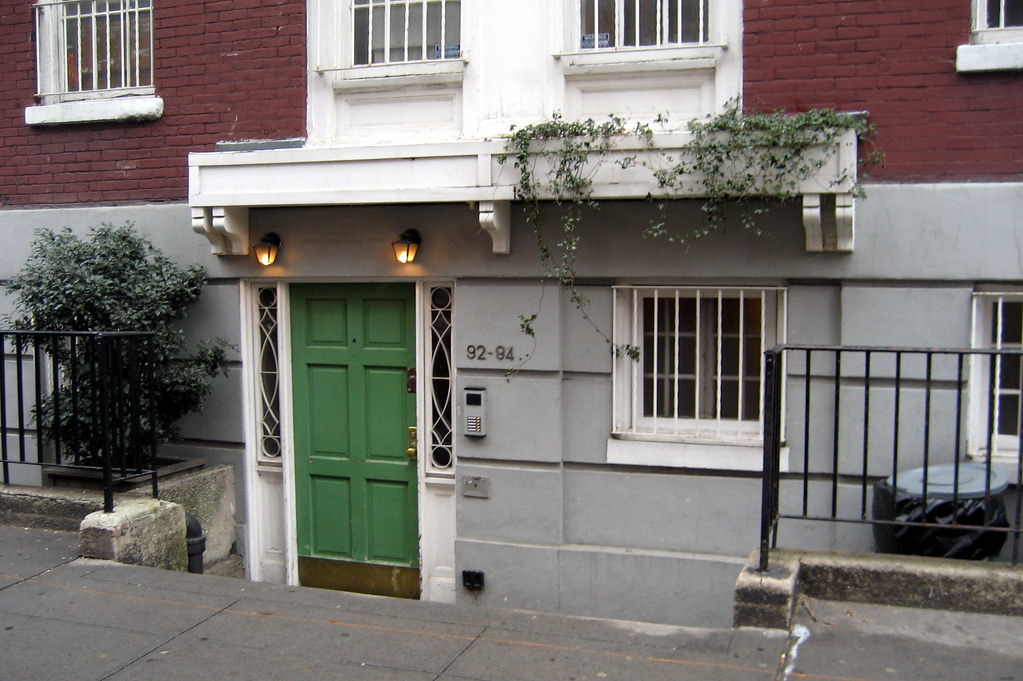
The songster lived that year in the uppermost story of 94 MacDougal Street, a Greenwich Village townhouse he owned.

The plastic bag I nicked from Dylan's curbside—a perfectly legal, if unseemly, act—contained nothing but soiled Pampers, dirty paper towels, and kitchen-table scraps. Not a single abandoned lyric, guitar pick, or harmonica holder. I quickly tossed the foul-smelling bag into a public trash receptacle nearby.

This month Sotheby's will auction a 15th-century Ming dynasty bowl valued at $500,000. The owner, an anonymous picker, bought the bowl—one of only seven known to exist—at a Connecticut yard sale for $35. The picker had the "good eye"—and good luck—my 17-year-old, treasure-hunting self lacked.

All trash may be trash, but some trash is also treasure. The secret is to pick the right trash.

A man named Paul Moran once picked John Updike's trash after seeing the late writer deposit two plastic bags in the garbage bin in front of his Massachusetts home.

Moran found a batch of honorary college degrees Updike had received—all in pristine condition—and decided then and there to make a routine of picking Updike's trash every Wednesday.

Moran's routine soon led to him to amassing an enormous collection of Updike memorabilia that included discarded drafts, old love letters, Christmas cards, vacation photos, utility bills, receipts, canceled checks, White House invitations, floppy disks, address books, eyeglasses, and worn-out clothing.

When the author discovered Moran was picking his trash, he took steps to thwart him, but they didn't work. Moran returned every Wednesday until Updike died in 2009.

I was sort of tormented by my activity,” Moran told The Atlantic in 2014. “It was a compulsion, an obsession. But I thought it was a justifiable one. I would have done the same thing if Picasso was living down the road."

Moran's treasures today reside in a rented storage unit in Austin. 

Mine lie buried in a landfill in Canarsie. 

Wednesday, March 3, 2021

One Man's Meat


Cows are delighted.

University of Tokyo researchers have grown beef in a lab, reports Nature.

While only a tiny morsel, the steak-like object paves the way to large-scale, lab-grown beef production.

Scientists' past efforts to grow beef in a lab have produced only a mince no discerning consumer would eat.

But the Tokyo University team has matched the real thing, growing cow cells in long strands that resemble muscle fibers.

When the researchers stimulated the cultured cells with electricity, the strands contracted, the way real muscles do.

“We have developed steak," lead researcher Shoji Takeuchi says.

Takeuchi's team plans next to introduce fat and blood into the morsel, "to make the meat more realistic."

No one has tried eating the product, because the University of Tokyo's bioethics committee has yet to approve that step.
Powered by Blogger.